Categories
Chicago 2016

Chicago 2016 Update: Olympic chief to stop by Windy City

2016 Logo

Andrew Herrmann of the Chicago Sun-Times reported today that Jacques Rogge, head of the International Olympic Committee, will come to Chicago for the AIBA World Boxing Championships in late October.

Herrmann reported that Rogge evidently was impressed by Rio de Janeiro when he visited for the Pan-Am Games over the summer.

More on this story when it develops, folks.

Categories
Cigar of the Week

Cigar of the Week: Rocky Patel 1999 Vintage Connecticut

Rocky Patel 1999 Vintage
The Rocky Patel 1999 Vintage Connecticut

This is the first of what I hope will be a regular feature on DanielHonigman.com: a Cigar of the Week post. I love a good cigar, so it generally made sense to me to start blogging about them.

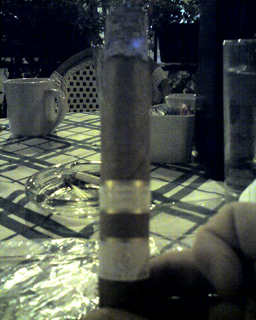
The first cigar up (please disregard the camera phone photo–I’ll have regular photos up in the future) is the Rocky Patel 1999 Vintage Connecticut. I picked up a Torpedo (think of a cigar that’s actually shaped like a torpedo) and lit up after a rib dinner at Gibson’s Steakhouse in Chicago.

(For you aficionados, the cigar has a blend of Nicaraguan and Dominican filler tobacco with a Connecticut wrapper, and all of the tobaccos were aged for seven years.)

There are a couple of great things about this cigar. First, it tastes wonderful. It’s extremely smooth and a bit nutty. I also thought it had a slightly minty aftertaste, which I enjoyed, so I gave it to Mollie to try out, and she agreed.

The ash was almost white (but you can’t see that from the photo, really) and it burned evenly all around.

All in all, this is definitely one of the better sticks I’ve smoked, and it would be perfect for cigar beginners, but it’s also complex enough for seasoned smokers. Enjoy!

Categories
Chicago 2016

Chicago 2016 Update: In Chicago, History Guides Bid for Games

Check out this interesting piece from today’s New York Times about the Chicago 2016 bid.

Categories
Hip-hop Video of the Day

Video of the Day: ‘Ain’t No Half Steppin’

Just had to post this classic joint by Big Daddy Kane. Enjoy:

Categories
Chicago 2016

Chicago 2016 Update: Chicago 2016 Committee marketers shuffled

Lew Lazare, the Chicago Sun-Times media columnist reported the following earlier today:

Gordon Kane

Gordon Kane (pictured), who was one of the top executives in the Chicago 2016 marketing unit, left to work on the upcoming world boxing competitionships set for Chicago. Kane evidently will continue to advise the city’s Olympic committee as a consultant.

Mark Mitten, who was responsible for developing the city’s new Olympic star logo, unveiled last week, and the various videos used to impress United States Olympic Committee members, is now in charge of all the 2016 committee’s marketing initiatives.

Categories
Chicago 2016

Welcome Sun-Times readers! (Re: Yesterday’s Chicago 2016 logo post)

If you decided to visit my page today after seeing it quoted on page nine of today’s Chicago Sun-Times, I want to welcome you to my site!

Of course, if you’re a regular reader, you’re always welcome. (But you should have seen the Sun-Times snippet. Kidding.)

Anyway, an excerpt from yesterday’s blog post on the new Chicago 2016 logo was featured as the number one response in the blogosphere for the paper’s daily “Lightning Rod” department.

Isn’t that dandy?

Anyway, new readers, this is the number one Chicago 2016 blog (just check Google).

Please come back often!

Categories
Chicago 2016

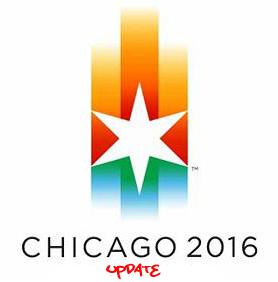
Chicago 2016 Update: NEW OLYMPIC LOGO UNVEILED

What do you think?

Here’s an interactive page from the folks at Chicago 2016 about the logo’s symbolism.

I’m not sure this one really captures my — or anyone else’s — imagination. If anything, if the games Games had are awarded to Chicago, the committee could revert back to the old logo.

(On a somewhat fun note, I noticed that the Chicago 2016 Web folks need to make some updates, as this appears to be one of the site’s main landing pages. Oops!)

Categories
My articles

Fishy Business: Chicago’s sushi boom is marked by Kamehachi’s 40th anniversary (UR Chicago Magazine)

By Daniel B. Honigman

Chicago has long been known as a meat-and-potatoes town—the kind of city where business deals are done over a steak and a handshake.

But in the city of broad shoulders, dishes like ebi, unagi and sashimi have become as familiar as filet mignon, tartare and sauce Béarnaise to gourmands, entrepreneurs, hipsters and average joes alike. Times change, and so does the food.
The sushi craze is more frenzied than ever in the Windy City, and Kamehachi can be credited with jump-starting the trend, as the restaurant celebrates its 40th anniversary this year.

Opening in 1967 at its original location in then-bohemian Old Town, Kamehachi was the first sushi bar in Chicago, located conveniently near the newly built Midwest Buddhist Temple. The modest 50-seat restaurant signaled the beginning of an era, with founder Marion Konishi dishing out sushi to local Japanese businessmen. However, it would take a little longer for skeptical Chicagoans to catch on—despite the neighborhood’s then-rising hipness. “Old Town at that time was a very vibrant community, with a lot of bohemian and hippie elements,” says Giulia Sindler, Konishi’s granddaughter and one of Kamehachi’s current owners. “But we still didn’t get many American customers.”

The restaurant soon gained popularity, as sushi caught on nationwide—and it didn’t hurt that Kamehachi was located across the street from Second City. (Dan Aykroyd and John Belushi were frequent patrons during the filming of The Blues Brothers.) Nor did it hurt that Kamehachi, a sushi bar, and other Japanese restaurants already in the city, allowed patrons to actually see their sushi being made firsthand, with sushi chefs given a chance to show off their skills. “My grandmother made tempura (deep-fried shrimp and vegetables) in front of the customers,” Sindler says. “It was very unusual to have the tempura and sushi stations in front of the customers so they could watch what was going on.”

In addition, the Japanese dining experience was new for most Americans, but its rise happened to coincide with the rise of a new “foodie” class, says Bruce Kraig, president of the Culinary Historians of Chicago. “Sitting at low tables seemed interesting and exotic, and Americans have always been interested in that sort of thing,” he says. “ This was part of the new food culture.”

But, says Kraig, parts of Japanese food were easier to accept than others, and sushi, at the beginning, was left out. “Forty years ago, people weren’t necessarily into raw tuna or eating poisonous blowfish,” he says. “Tempura and teriyaki—fried foods
Americans eat—they were certainly familiar to Americans. They just didn’t eat sushi then.”

But we certainly do now. Nearly a half-century later (and with five locations in Chicago and Northbrook), Kamehachi is going strong, and because of its success, the restaurant—and Konishi—can be credited for spawning Chicago’s sushi scene, as they were responsible for bringing in many sushi chefs and cooks from Japan, says Sharon Perazzoli, Konishi’s daughter. “Many of them stayed in Chicago and went on to open their own restaurants,” she says. “Because we’ve been around for so long, I think you’ll find that, in a great majority of Chicago’s sushi restaurants, there’s probably someone we know or someone who has worked for us at some point.”

While Kamehachi is a traditional sushi bar, many newer restaurants have pushed the cuisine’s boundaries, drawing in an even more eclectic group of customers. Monica Samuels, general manager of SushiSamba Rio (504 N. Wells, 312/595-2300), says that on any given Saturday night, the restaurant can serve up to 700 customers. What keeps them coming, she says, is the food, a fusion of traditional Japanese dishes with Brazilian and Peruvian flavors. “People don’t only want California rolls,” Samuels says. “Our chefs have the opportunity to try different ingredients and different sauces. You’ll see hearts of palm or chimichurri on sushi rolls, but if you come here and order basic nigiri sushi, it’s still amazing. If we used only spicy mayonnaise and avocado, we’d be limited. You can have some fun with sushi.”

Regardless of how it’s made or the ingredients it’s paired with, sushi really has become a Chicago staple, and it’s not likely to fall off the culinary radar any time soon. “It’s pretty phenomenal,” Perazzoli says. “ When Kamehachi opened 40 years ago, nobody wanted to eat raw fish, but today even young children are eating sushi and raw fish. Sushi has completely evolved since the time my mother (who died in 1990) started Kamehachi. I think we only had cucumber rolls, a few different pieces of sushi, and that was it. Today, all kinds of ingredients are going into sushi, and the more complex and creative it becomes, the more people like it.”

So, what about steak? John Colletti, managing partner of Gibsons Steakhouse (1028 N. Rush, 312/266-8999) and Hugo’s Frog Bar (1024 N. Rush, 312/640-0999), isn’t ready to pack it up quite yet. “Sushi really has taken off,” he says. “But while I see more and more restaurants in Chicago featuring sushi, I think Chicago’s still a meat-and-potatoes town.”

This story originally appeared in the Sept. 13 issue of UR Chicago Magazine. You can pick it up from a UR Chicago box in downtown Chicago or you can read it here.
Categories
Chicago 2016

Chicago 2016 Update: 2016 Olympic bid cities announced

2016 Update

And then there were seven.

Chicago officially has some stiff competition for the 2016 Olympics. Baku, Doha, Madrid, Prague, Rio de Janeiro and Tokyo are also in the running with the Windy City.

Now what happens? The first phase, known as the Candidature Acceptance Procedure, will feature a review by the International Olympic Committee of each city’s potential to organize a successful Olympic Games in 2016. The second phase, the Candidature Procedure, will have city Olympic committees submit in-depth descriptions of their Olympic projects.

(You probably don’t want to read these 100+ page procedures, but I linked you to them anyway, just in case!)

Categories
Chicago 2016

Chicago 2016 Update: USOC submits Chicago 2016 application to IOC

2016 Update

The United States Olympic Committee formally submitted its bid for the 2016 Olympics to the International Olympic Committee last week.

Chicago 2016 committee members submitted their letter of intent to USOC President Peter Ueberroth and Chief Executive Officer Jim Scherr, who in turn submitted it to IOC President Jacques Rogge.

“The USOC has given us an opportunity to showcase Chicago around the world and to advance the Olympic Movement,” said Mayor Richard M. Daley in a press conference. “We are looking forward to working with the International Olympic Committee and convincing them why we believe Chicago is the best host city for the 2016 Olympic and Paralympic Games”.

Other National Olympic committees have until Sept. 13 to submit their letters to the IOC, and cities likely to formally declare their candidacies, prior to the deadline include Rio de Janeiro; Madrid; Tokyo; Doha, Qatar; and Baku, Azerbaijan.